Showing posts with label becoming a writer. Show all posts

Monday, November 29, 2010

The Difference Between . . . .

This was somewhat inspired by a post I read on FB. I don't want to give details . . . but suffice it to say it involved a mother returning a gift picked out by her child. I thought, "The difference between her and I . . . is . . . "

Miles.

I WEAR the noodle necklaces, the jigsaw puzzle pins. I hang the pictures on the walls--in the formal living room. I would never, ever, ever, ever, ever (ever infinity) RETURN a gift picked out by one of my kids. I have more knick-knacks than a cluttered flea market. And I love them all. With my memory, I can tell you what occasion I got them for (blue angel with feathers? Christmas, given to me by Bella, 2nd grade) . . . and when I see them, I smile.

I am a mom. Every time I ponder this sort of difference, I am reminded of one of my all-time favorite lines from Everybody Loves Raymond. In the episode, Debra, Ray's wife, who was always at odds with her mother-in-law Marie, has a visit from her own mother for the holidays. Her mother, though, chooses to spend the visit going into Manhattan to see museum exhibits, rather than spending any real quality time with her grandchildren, and in a fit of angst, Debra says, "I want you to be more like HER!" (pointing to Marie). Later, Marie tells her the difference. "Your mother is a nice lady, but she is not motherish."

Of course, I am not terribly motherish. I don't cook. I don't do crafts (the gingerbread house I made with Dynamo Boy this weekend looks like the Gingerbread Housing Association condemned it). But I love them fiercely. And I would NEVER return a gift.

Which brings me to writing.

We all write. So what is the difference between a writer and a published writer (no matter the format)?

I can think of a few.

Relentless editing. RELENTLESS.

I have been working on my new novel for a year, I think. And last night, I sat down to do a final polish on the first 60 pages. I probably changed 250 words/lines. That may not sound like much, but if you consider this is a third or fourth pass of a novel I have tinkered with for months and months, and months . . . and that every word choice and change was quite deliberate and made it better . . . I consider that relentless.

Openness. I am often stunned by writers who are not widely read. Though I read a lot of science nonfiction, and read biographies, which are not my genres, I also read classics--and learn from them. I read fairly widely. I read essayists. I read ALL THE TIME. I want to learn. Constantly. Intellectual curiosity is the writer's best friend.

Persistence and a dose of courage. At this point in publishing, I don't know when someone says, "I'm going to self-pub," versus "I'm going to seek an agent/publisher." I can't say what's the right path for anyone. But even if you self-pub, there has got to be a persistence to learning craft, to sticking with it. If you have never subjected yourself to an OBJECTIVE (yet subjective) critique by a person who doesn't know you, or a top-level crit group, etc., and then got back on your horse afterward, I would say you are missing on an opportunity for growth as a writer.

All right, gang. What's the difference? Between moms and "nice ladies," and fathers and daddies? Between published writers and others . . . . is there a difference? You tell me.

Monday, September 13, 2010

Measuring

In my grandparents' cottage, my six cousins and I would be measured each summer, our ages and heights marked off in pen on the frame of a door. It was always fun to see how tall we were compared to the previous summer.

When I first attempted to write a novel, when I was 22, I can tell you there was a lot of back story and too much passive language. Dialogue? I had that nailed. I also knew the characters--and they were three-dimensional. I think the pacing was all right--except for that back story thing. So that was where I started. Over the years as an editor, I have seen writers start out much "shorter"--where their characters even needed basic development. But we all start somewhere.

Over time, I started "getting" some of the elements of novel writing, whether it be pacing, or fuller character development, motivation, etc. I crept up on that door frame of a writer's life.

And now . . . .?

I find that I'm at the point where it's elements like wordsmithing description---the sky over Moscow is not described the same as the sky over my house here. I'm working on the decisiveness of my word choices. Conflict . . . (I hate conflict in real life so sometimes I'm hard-pressed to stick it in my novels). And I can look back and see my measurements over the books and unfinished manuscripts I've written. I know I've come a long way. And I know I plan on growing some more.

So where do you measure today? And where do you see your progress?

Friday, August 27, 2010

About that Million Words . . .

Long-time blog readers may recall the death of my housekeeper's baby in December, and my involvement with the family. Since then, out of a horrific tragedy, I have a wonderful relationship with her, her husband, and their four children. I'm on the kids' school paperwork as emergency contact, they stay over at my house on occasion, and I am their "aunt"--except when my housekeeper teases me and insists they call me Grandma. I have since tried to teach the father to read and write in Spanish, and speak some English, and they are teaching me Spanish more fluently (I understand pretty well, I don't speak it much at all). When she brings over her friends for various things--either to help clean or for me to interpret English papers and documents, etc., for them--I always say to my dear Rocio, "What is she saying?" or "Tell me what she said again." And when Rocio's kids are here, I ask the oldest, when it's something important, to tell his mother what I am saying in Spanish. Yesterday, Rocio scolded me, as is her way, "EEEEEEEEEEEEERICA, no speaking the English. You speak Spanish to Delores."

And she's right. I won't learn (which she knows I want to) without practice. And every time I use her as my personal interpreter, I fall back on crutches.

Which brings me to that million words. Give or take, maybe it's two million. But you have go to get a significant number of words under your belt before you master writing. We bandied about the idea that just because today you CAN publish anything you write, doesn't mean you SHOULD. There's some process whereby no one can TEACH you, where you shed your crutches and finally have your "ah-ha" moments on the way to writing fluency.

I cannot TELL you, as in its truly not quantifiable, how many times I have turned over a manuscript to a client, filled with red, and watched their faces undergo some kind of change, or gotten a call or an email, wherein they say, "Ah-ha! NOW I get it." No shortcuts to fluency. You can have teachers . . . but there's no substitute for a million words. Give or take.

Thoughts?

Thursday, June 24, 2010

Talking Yourself in from the Ledge

So after yesterday's post, I think it's clear just about everybody has days that are filled with doubt. For me, that looks like, "There is no way I am writer enough to tackle this." Or, "I've completely lost my way." For others, it can be as basic as, "I suck."

Then, because that's the way it works, you can get in that space, and the Universe will be only TOO happy to oblige you. You'll get a bad review, a tougher-than-usual critique. You'll have a flop of a book signing, or you'll be cornered at a cocktail party and when someone realizes you haven't PUBLISHED yet, will suddenly lose interest in your writing. You name it . . . something will happen to back up your insecurities.

So how do you climb back in from the Ledge of Doubt?

  • Get inspired. Whatever that looks like for you. Go to a museum, listen to music that fills you with feelings of creativity, take a walk, run a few miles, whatever.
  • Find writer friends who get you. I've often shared that there are lots of different ways to run a critique group. The one I am in has an actual written description of how we work. We thrive on pointed criticism spoken with a sense of respect for each others' feelings. When I'm in my group, I know it's a perfectly safe place to share my stuff--even less-developed or polish material I am feeling my way through, like this past week.
  • Avoid writers in the 'sphere who don't get you. Makes sense, right? I used to visit this one blog, but the five women who ran it were so negative ALL the time that I wondered why they even wrote. I visit no more.
  • You're not gonna quit, so suck it up and go write. I know you, Writer. I know you. YOU, the one who says you're going to quit, that trying to get published is too hard, your writing sucks, you're fooling yourself . . . yeah, YOU. Look, if you could NOT write, you would have quit years ago. So stop talking about quitting and just go write.
  • Write a million words. Yeah. Just KEEP writing. It's a cure for what ails you. You'll find your voice. You will.
Any other suggestions?

Wednesday, April 14, 2010

They Don't Tell You This in Writer School

Writing/publishing for a living is pretty much about learning "on the job." You can take all the English classes you want--just because you can write a pretty sentence doesn't make you, for instance, an editor. Some very good writers are lousy proofreaders. Some good editors are not great writers. Most of what I know, though I have a fancy piece of paper saying I did, indeed, graduate with a triple-major, including an English degree, I learned over time, and I learned working for publishing houses like this one.

Writing novels is even MORE about learning through experience. And a lot of things you just don't know until they happen to you.

So yesterday, in the utterly surreal world of being a novelist . . . I shipped off two books to a major studio. Don't get excited. Don't even raise your coffee cup. You see, I've been optioned, at last count, I think four times. Twice some nice money was involved. None of this ended up with a movie or television show. My agent has fielded calls from production companies attached to household names. But in the end . . . I'm here writing this blog, not taking lunch here. Nonetheless, though I am telling you not to get excited, it is admittedly . . . fun.

On this same day that I was sending my book, I learned that I will have the third editor in three books for Magickeepers. This has not been easy. You grow attached to your editors, though admittedly, I ADORED my first editor and my second one I didn't know so well. When you lose an editor, a lot of different things can happen. I am heartened and thrilled that I heard from the publisher's VP that they will make the transition smooth for me. Wow . . . I mean, he meant it, and I could tell. But I have lost an editor before and it made for an orphaned book that, frankly, was treated crappy . . . so it can go both ways. And none of this you learn in Writer School.

I am always somewhat amused when I am cornered at a cocktail party and asked, "Would a publisher buy a book from an idea, because I don't want to waste my time writing a book for a year if I don't know they're going to buy it." Hilarious, right?

So tell me, what is something they didn't tell YOU in Writer School?

Thursday, March 18, 2010

The Finer Points

I may be getting a second class of ESL students. I teach as a volunteer, and my Wednesday night class is composed of Latinos from El Salvador and Mexico. But now a second class of eight immigrants has potentially reached out--these people are Chinese.

The class I teach is of my own making. I visit a lot of ESL sites and use ideas I see for lessons, but it's pretty much, for now, "Boot Camp" English. Last week we learned money and "What can you do?" "I can cook, I can clean, I can . . . " Next week is "I feel"--"I feel happy, I feel sad . . . " But then because I have students who cannot read and write even in Spanish, and are completely illiterate, there are other very basic things I have to teach. Next week? What is a normal body temperature? If you can't read and write and can only count to 50 or so, then how can you read 98.6 and above? You see, at least the students I have . . . I am teaching them to survive.

I envision a day, of course, when my students can write the alphabet. ALL the letters, not just the first five we did last week. And when they speak well enough that we start learning the finer points of language. You know . . . which witch is it?

Because I work with words all day, and then teach at night, it seems like language is all around me. And I started thinking about writing. You start out just telling a story. But then, like over at Lurker Monkey's flash fiction. you start thinking of story as beginning, middle, and end. No sooner do you learn to get rid of passive language, then you start grasping the whole "back story dump" concept. You learn pacing, and how to create more memorable characters. You get a few rejections or you get a beta reader, and you have, frankly, "Ah ha" moment after "Ah ha" moment.

So where are you in learning the finer points of writing a novel or telling a story? In my current work in progress, after years as a dialogue-driven writer, it's a lot of prose this go 'round, and it's a whole different level of storytelling. One of my characters can't speak . . . so all his chapters are internal. I'm learning to dig deep on the details.

Thoughts? Where are you on the finer points? What do you struggle with? Santo cielo, it's not easy.

Wednesday, January 13, 2010

It's More Than Just Write

I wish I had a dollar for every person who, upon hearing I'm a writer, has said, "How would you like to write my life story?" or "I've got a great idea for a book, want to write it and split the royalties?" Or, my favorite, when I moved into this insane Desperate Housewives neighborhood, the woman who told me all about her family, and then said, "But you can't use any of this material, because some day I'm going to write a book. I mean it! I'll kill you if you use my stuff." And then there are the people who say, "I've always wanted to write a book, how do I get started?"

I am actually very patient with the latter, because I think it takes a measure of imagination, passion, perseverence, and so on to actually set out to write a novel. And so I offer my best advice, tell them to seek out writers' groups, or recommend this book or that. And because TALKING about writing isn't writing, and because I know a huge percentage (anyone care to quantitfy?) of people who say they are going to write a book do not, indeed, ever write past, say, chapter two . . . I often say, "Just write." Because in the end, if you have no written words, you have nothing to edit, nothing to polish, and so on.

That "Just write" is definitely lobbed around the writing blogosphere, for sure. But really? It's a lot more.

  • You have to read. A lot. Read in your genre. I often say I don't read romance. And that's true, mostly because my time is limited and I genuinely like to read other things. But that doesn't mean I have no idea what's being bought, what's selling, who these writers are, that I haven't picked up their novels and read the first chapters, read their back covers and thought, "Hmm . . . clever." Or "Hmm . . . been done to death." To set out to write in a genre without knowing how the wind is shifting? Not recommended.
  • You have to be curious. Endlessly so. To avoid that "done to death" feeling, you have to have fresh ideas. And fresh ideas spring from the curious mind, from the mind that's always active, always thinking. Always reading, not just in your genre, but about news and people, and the world. You can't write a gitty detective novel without some knowledge of the streets . . . and you can either be from the streets, or you can absorb it through research and curiosity.
  • You have to put it out there. No, I don't mean querying the second your novel is done. I mean showing it to trusted people first and asking them for their opinion. And being ready to receive it. No, this isn't your mom, your Aunt Edna, or your co-worker who reads The National Enquirer on her lunch hour. It's not even your pal from high school who reads thrillers all the time. Because most people who are READERS will be fairly impressed you actually WROTE A NOVEL (Holy cow! That's a lot of words!). They may say, "This is as good as . . . . " But other WRITERS who have put their time in at the craft will say, "You DO realize this is all a back story dump here, right?" Or "I actually don't think your story BEGINS until page 30." Or "This detective is entertaining, but there's nothing fresh here." Rejection sucks. Pointed criticism isn't much better. But if collecting praise is your thing, you won't get anywhere in this biz.
  • You have to be persistent.
  • You have to really LOVE this. I mean love it. Try not writing for 30 days. What does that do to you? Can't make it a week. I've got bad news. You're a writer.
All right . . . anything else to add to the list, Gang? Happy Hump Day!

Monday, October 19, 2009

True North

As a parent, there are probably few greater feelings than knowing your child has found their true north. When Oldest Daughter drifted from violin for a while in early high school, I was worried. Because deep down, I was pretty certain it was her true north, but you know . . . people have to discover that for themselves, so all I could do was watch and pray.

Oldest Son . . . he and schoolwork were not on a first-name basis. Well, that is not quite true. They were WELL-ACQUAINTED but not in a good way. Getting him to do his homework was for several years something akin to torture for ME, as the primary ass-kicker around here. Then I decided to just let him fail. Because really? I was not going to follow him off to college someday nagging him to do his homework. A few Ds, a sprinkling of an F. I sat him down and said, "So? You tired of bad grades yet?" I let him fail even though I knew his IQ was at genius. A little failure doesn't hurt a kid. To make a long multi-year story short, he ended up discovering what I knew all along. That math was his true north (though he is doing really well in physics!). He applied to a governor's academy and is now a straight-A student in high school. He is happy every day. EVERY DAY. I am delirious with joy . . . HAPPY every day of HIGH SCHOOL? Happy with a heavy course load of physics? Happy? The joy of your child finding their true north.

Which got me thinking about writing. It has been this constant in my life, though for a brief (!!) period of about a year, I toyed with a different career, which largely made me miserable. It paid really well (human resources), but it was just not for me. I wanted to be alone, behind a computer, playing with words.

Writing . . . has been my friend since I started keeping a journal in third grade. Since I started making up stories about the same time. I wrote my first play in second-grade. No matter what I was going through in my life, writing was there. (As were books, my first friends!)

I don't know that I spoke the words often: "I want to be a writer." Not very often at all. I think because that invites questions. "Well, what do you want to write?" And until I was in my twenties, I don't think I knew the answer.

But like all true norths, just because I didn't say the words doesn't mean it wasn't there.

I am always rather fascinated by people who take up writing late in life. I wonder if they ignored the voice inside. Or stumbled into it.

So tell me . . . how and when did you discover your true north?

Thursday, October 08, 2009

Gains and Losses

I used to write rather fearlessly. I sat down and wrote my story from beginning to end. I did another draft. I sent it to my agent.

I still write fearlessly, I suppose. But I think a HUGE step forward and yet an agonizing step into Writer's Insanity, has been my very clear understanding that with every CHOICE I make in a book, I gain something and I lose something.

Choose a voice--and you lose the option of other voices.

Open your story at Point A, and you lose the drama or the humor of opening it at Point B.

Suddenly, there is far less of a straight line in my stories. I spend a great deal of time thinking about CHOICES.

I was asked to read something for an acquaintance of an acquaintance from California recently. When I finished reading it, I was pretty sure that the first 55 pages or so were a back story dump and said, "Your real story doesn't open until . . . here." The woman not-so-politely responded, "You're probably right, but I LIKE all this back story. It's the kind of book I would like to read." I suppose that's a choice in itself. But it felt like the writer made no real choices, no hard and fast decisions. Rather, she put EVERYTHING in.

Here's a couple of lines of dialogue from one of my favorite flicks, The Wonder Boys (about a writer/professor and a lost weekend):

"Grady, you know how in class you're always telling us that writers make choices?"

"Yeah."

"Even though your book is really beautiful, I mean, amazingly beautiful, it's... it's at times... it's... very detailed. You know, with the genealogies of everyone's horses, and the dental records, and so on. And... I could be wrong, but it sort of reads in places like you didn't make any choices. At all. And I was just wondering if it might not be different if... if when you wrote you weren't always... under the influence."


**************

I think that's the difference between me as a writer now versus when I was twenty. Now I see all the choices. I see gains and losses columns.

It makes for a better book. But all the more agonizing.

Thoughts?

Thursday, August 13, 2009

Belief

From the long list of qualities I offered yesterday for a critique partner, I left something off. Because it's not a "requirement." You're just lucky as hell when you get it.

You see, you can have beta readers and critique partners who are very good, but who never cross the imaginary line. What line? I think every writer needs someone who believes in them.

A certain someone knew I was having a bad day last week. He wrote what to him may have been an offhand line.

I have so much faith in you that . . . .

I don't know about you guys . . . but we all have days when the Demons of Doubt descend on us. It doesn't matter your circumstances. If you write full-time, like me, there are months, quite simply, when the checks don't come. I once had a FIVE-MONTH contract negotiation.

If you have a day job and are unpubbed . . . you have days when you wonder . . . why do I spend all my free moments writing this when I feel like I am banging my head against a wall, when the market is so bad right now, when . . . .

If you are pubbed but your print run is tiny, or the co-op you were promised doesn't materialize, or your cover isn't quite what you expected . . . there are days.

It really doesn't matter what scenarios I paint, does it? You wonder if you'll ever finish the Epic in Progess. (And welcome back . . . you were missed!) You wonder . . . you wonder . . . .

And it is something special, magical, and for a writer, life saving, about having someone who sometimes quietly, sometimes not so quietly, listens to you rant about giving it all up. And then says, "Do it anyway. I believe in you." Or even, "Shut the hell up." They cheer you when you need a little cheering, or kick your proverbial ass when you need that too. They do it without pretense. Without jealousy or falseness. They do it because they believe in you. And because, perhaps, they are practicing a speech for their own Demons of Doubt.

You can't add it to some handy list of what to look for in a writer-friend-confidant-critiquer. But when you get it . . . bow to the Writing Gods and thank them.

And while you're at it . . . my best friend's story is up over at Lurker Monkey's. I believe in her.

Thoughts? Who believes in you?

Thursday, June 25, 2009

How to Be a Writer

Despite the title of my post, I really have no idea. I can teach people all sorts of rules of writing. I can mentor, guide, critique, even heavily edit someone's material. But I can't TEACH someone how to be a writer. Not really.

However, I have come to realize the people who succeed, those that I know personally over the years who have gotten contracts, big and small, who are still in the game years later, who seem to have a fan following, all of that . . . they seem to share some common traits. I am sure you notice a few yourself if you read enough blogs and talk to enough writers.

I have come to the conclusion that persistence is overrated. [Before you shriek, wait for the rest of this.] If you persist in sending a steaming pile of meh out, the same steaming pile of meh, a hundred times, you might wear down some poor underling editor at a small house, but I don't think you'll embody success. I have seen bull-headed writers insist they are the next Hemingway or Salinger or Fitzgerald, and no amount of critiquing--gentle or otherwise--seems to stand in the way of their delusion. They are PERSISTENT. Persistence can be learned, but there is also a personality type that simply refuses to give up. Call it delusion. I used to know a woman married to an actor--a singularly unattractive man who could not act his way out of a paper bag, but refused to get a day job lest he miss his "big call" while she slaved away long hours supporting his dream. Nope . . . that is supporting a delusion.

So I think before persistence, there must be a willingness, an incredible OPENNESS to learn craft.

Then persistence.

I think writers also have to have an understanding that this isn't easy. That's it's a marathon, not a sprint. That your first novel might sit in a drawer forever because it was like kindergarten and it might be your fifth or sixth or tenth novel that really gels.

The writers I know that I consider successful never stop learning.

Note these are all TRAITS more than "don't overuse adverbs."

So what would you add to the list? So far I have:

  • Openness
  • Persistence
  • Endurance
  • A mind open to learning

Maybe it's that there is a different between learning HOW TO WRITE and learning HOW TO BE A WRITER. What do you want to add to the list?

Tuesday, June 09, 2009

New

When I was in my early- to mid-20s, I was in two different writing groups over the years, both of which had members decades older than I was. I walked in with my very (VERY!) dark noir stories, cowboy boots, and (in one group) baby, and generally received accolades. I can do noir. I could do it at 20. Heck, I could do it in my teens. That's what I wrote, gritty short stories of prostitutes and drug addicts and alcoholics. I aspired to be the female version of him (though I have to honestly say I read a Scudder novel recently and could not get through it--so obviously, I was in some kind of angsty phase).

And then the BEST thing happened to me. I decided to write something different. And though my group at the time said the characters were amazing, my writing was off my rhythm. I had to learn a whole new rhythm for writing that was not noir. I had to endure criticism after hearing years of "you are a very talented young writer." I had to figure out if I was going to continue to write in my comfort zone forever, accumulating praise or try something else.

Time went on. I formed my current writing group 16 years ago, give or take. Over the years, I've tried my hand at a screenplay, a one-act play, YA, chick lit (I prefer the term "comedies"), and now a thriller. I've written short stories when I was stuck. And Oldest Daughter found a folder of my old poetry this week and told me, flat-out, she thinks that is my BEST writing ever and I should write a poetry collection.

I realize now that my progress as a writer has been marked by trying something new . . . feeling like I have conquered it (or at least learned the rules, tried on a voice, something), and then SEEKING out something new to make me feel off-kilter and grow again. Then, when I return to something I am familiar with, like a muscle that's been stretched and tightened, I bring a new perspective and insights. Characters are characters, after all.

I sometimes watch other writers essentially tinker with the same character over and over again, just in different books or different settings. It's funny, but I started a book two months ago--even got my agent all excited about it. But I realize I was returning to old territory, so if it's not fresh to me, then there's no point. So now it's about taking the same plot (it's a good idea) and seeing what I can do with it that goes deeper, smarter, leaner, whatever.

I hope he guesses I mean him, but I beta read for a friend and it was a new genre for him. I had some criticisms and some positives. But I forgot to give him a big bravo for trying something on for size.

So here's my best bit of advice for your morning cup of java. You want to improve as a writer? Turn your writing world upside down every once in a while. And for heaven's sake . . . don't keep seeking out the praise. It's an addiction and after a while, it'll poison your writing.

Half a cent for Tuesday. Thoughts?

Saturday, May 23, 2009

Shake It Loose

I don't know what people's impressions are of what happens once you've published a novel or two. Whether all sales are easy, whether I flip my grocery list at my agent and say, "Sell this," or what. I've had proposals rejected. I've written some things, gotten to page 200 and abandoned them. I've started 30 novels, gotten to page 10 and thought, "This sucks," and there they sit in my Word files.

I have at least three novels very nearly complete, which I decided aren't "there" yet and am workshopping them one by one to get them "there." I shake things loose from time to time. By that, I write a short story. I play with a genre I know nothing about. I try different POVs or narrative devices. When my experiments work, at that point, they might see the light of day.

What I don't do is write everything solely with a sale in mind.

I mean, the sale is there, in the distance, but it's generally a "let's not go there yet" thing. Not yet. Not until I swim around in my words for a while.

When you worry too much about the sale, reading market conditions like mad, licking the tip of your finger, pointing it in the air, and trying to determine the direction of the wind, I often feel what ends up happening is kitchen sink writing. What started out as a thriller, ends up also tossing in apocalypse theory, nuclear bombs, and a French sidekick who is a vampire because that's what's selling. I've seen writers stagnate in a pool of sellable ideas, stuck like quicksand. Their writing is hampered by not shaking loose and trying something that might NOT sell but man, has some heart to it.

I have sent poor Lurker Monkey dozens of ideas over the years. Sometimes three or more ideas in a single email. "What do you think of this?"

And God, that Monkey is awesome, because he will sometimes write back, "Idea 3 is a no-brainer, you could write that in your sleep." And "Idea 2 . . . wow, that would be hard to pull off, and I'm not even sure if you could sell it, but IF you could pull it off, it would be something."

And that . . . that's when you know you are shaking things loose.

And sometimes . . . sometimes THAT is when you do your best writing. Starbucks dropped by the other day to say her first draft is for her alone. I thought ... she's onto something.

So how do YOU shake it loose?

Wednesday, April 15, 2009

Blue Books

When I was in college, I took a class on Middle Eastern history. I was a freshman, and it was a senior-level course, which could be taken for graduate school credit. My academic scholarship meant I was given an exemption from all lower-level or intro classes and could simply take whatever I wanted at whatever level I wanted, so naturally, as a freshman, I took all senior-levels because that's what you do when you want to rule the world at 16 or 17.

The final was an essay exam. And the professor required us to make arrangements to take it outside the normal examination times. Generally, you took finals from, say, nine to noon, or one to four in the afternoon. But the professor said, "If you complete my exam in under five hours, I guarantee that you will fail." Hence, we needed to make arrangements to take the exam in a full day.

We also had "blue books." They were essentially little exam notebooks, and you took your essay exams by writing in them and turned them in. Each had 40 pages or so. My professor for this particular course advised us to purchase a minimum of three for his exam. Because my handwriting is so large, I bought five.

And I filled them.

Writing . . . for me . . . came easily. I could write on reams of paper on any essay topic, and I loved it. I also presumed that was how writing would always be for me. I sold the second novel I ever completed . . . and sold 20 or more books after that. In general, I sit down at my computer and . . . write. I learned to write in a zone, against pressures of deadlines and four children. I learned to write with a Demon Baby crawling on my chair. I wrote when I was nine months pregnant, and I wrote with morning sickness. I wrote when Crohn's disease battered my joints so badly I wanted to scream. And I wrote when I was sad. I wrote when I was happy. Basically . . . I wrote no matter what was going on in my life.

Writing, for me, has been like filling the blue books--flowing and, in my mind, fairly easy to do.

But I realize now that has been deceptive. The last year or so, I have done some of my best writing--often on books I haven't yet finished or even shopped or shown my agent. I've worked through not one or two drafts, but three and four and more. I've deleted more pages than I ever have before. I have slashed and burned. I have cut characters, moved scenes around, and focused on pacing. I've upped my game.

And now I get that writing is supposed to be hard. No, it's not digging ditches for a living, but if you do it right, writing should involve some degree of banging your head against the desk. If it doesn't, I am convinced you're not trying hard enough or you're not willing to put it ALL on the table and rip it to shreds until what you have left, what words remain, are as close to perfect as you can make them.

I thought, as I wrote this post, of Oldest Daughter. You see, I can read music. I can play a little Bach on the piano. Can pick out a tune. But the music she comes home with now . . . I can't read. It's such a massive array of tiny notes and marks and up-bow signs and fingerings and . . . then I hear her play the concerto, or better yet watch her. Her fingers fly. I even, sometimes, sit next to her somewhere, like Demon Baby's Christmas pageant, and watch as she absent-mindedly moves her fingers up and down an invisible violin. But I know, because I hear her in her room practicing, that she can play the same line 20 times in a row, relentlessly aiming to nail it. She's at a level of playing now when it's no longer filling blue books, but it's hard work, real work.

I also know it's the work that makes her heart happy. Just as I know even the unfinished words in files on my computer represent the hardest work I have ever done, and on some level the most satisfying.

I don't fill blue books anymore. It's harder than that. And that's a good thing.

Thoughts?

Friday, December 12, 2008

Blog Guest: Baby Girl Writer

I came home last night from Oldest Son's band concert and Baby Girl had written THREE chapters of a book called Runaway Orphans. It has action. It has mystery. It has details. It has pathos. It has a villain. It has a great, spunky heroine. And my first thought was . . . MY KID IS DOOMED, and I'll tell you why. But first . . . some exceprts.

Chapter 1
The Orphanage

I sat on the orphanage front steps wondering where my parents could be and why I was in this terrible place I call home.


And really, no child should be in an orphange. So our young heroine decides to run away and search for her parents. But first, she must go the evil Head Mistress's office to find her own case file. That's in chapter 2, which begins . . .

Chapter 2

The Head Mistress’ Office


I sneaked down the hallway and slipped into the office. The door read “Head Mistress.” On my tiptoes I walked to her gray, scratched filing cabinet holding my breath.

Well . . . then our young heroine decides to bring her best friend. We also learn they don't feed them too well at the orphanage. Here's an excerpt from chapter 3.


“What’s for lunch?” Bethany asked.
“What’s always for lunch?!”
“Aw! Why do we have to have mashed beans with spinach for every meal?”
“That’s because we live in a rat hole.”
“It’s not that bad, it just needs some minor adjustments,” said Bethany.

“Minor adjustments! I found moth holes in my blanket!”
“Ew . . . and why did you need me anyway?”
I wanted to tell her my plan, but evil witch Head Mistress came by us. She stared at our faces, probably wondering why a beautiful girl like Bethany would be hanging around a freckle-face freak like me.
“Hm. You girls seem very…”
Don’t say it! Don’t say it! I chanted in my head.
“Different.”


All right . . . now here's why she is doomed. After I had read the entire book so far, Baby Girl looked at me and said, "I've been wanting to write this for so long. I had this first line in my head for a really long time and I just needed to get it out."

Doomed, I tell you.

So my question today . . . as Baby Girl pops in and out . . . is does this sound like all of you? That you have these stories BURSTING to get out? Is that how you knew this was what you were meant to do? It's a writer thing, isn't it?

Discuss.

Friday, October 03, 2008

So You Want to be a Writer?

Oldest Son loves math. He loves theoretical math and physics, and he does things in his head that would send the average person running for a calculator (I know I still need to "carry the 1"--he never does). His new goal is to go to MIT and be a math professor. This week, for his gifted math class, they each had to interview one person who uses math at his or her job and tell the class about it, make a poster, and so on. Oldest Son chose my friend, Richard, who is an engineer. Richard graciously came over last night and the two of them did problems--talking about psi and cylinders and air pressure in cylinders and calculating it. FUN TIMES! (If you like math.) Then the most important question for the report: Oldest Son asked "What qualities do you have to have in order to do your job?" The qualities Richard listed were "likes math, enjoys taking things apart, pays attention to detail, very organized." The last two basically eliminate my kid from the job. So I said something along the lines of "He's good at theoretical physics and less so about that whole organized thing." And that got us talking about Myers-Briggs and where a theoretcial physicist falls on the scale (creative AND mathematical). Which brings me--of course--to writing.

What qualities embody the writer? I always think I'd list curiosity. Loves words and English. Observant. But I think I've been doing this so long, that there are parts of it that I have come to accept aren't things you can learn. There are some people who might want to be a writer, who will churn out manuscript and short story after short story, and there is some essential element that no amount of practice . . . can remedy. On the flip side, we always say "never give up." It's a mantra. We talk (as yesterday) about how we grow and develop and so on--we move on from the crap we write to better crap. But maybe the career path is different with writing. There's no real certification process. You can't learn a formula. No memorization. It's more intuitive. (And yet is it any more intuitive than looking at an engineering problem and knowing how to solve it?)

Now, as an aside, as a mom, I sincerely believe in helping my kids shoot for extraordinary lives. When Oldest Daughter decided at 3 to be a violinist (and believe me, she decided at 3), I had no idea that would mean sacrificing for 18 years and scraping together every cent for violin lessons and an 18th century violin. But . . . here's the thing . . . she had perfect pitch at 3. So there was "something" that couldn't be taught, and an innate LOVE--absolute love--of music--she would literally be ILL without music. And I don't mean that in some casual sense. It would make her ill. She has something that can't be taught--but NOW it's all about how hard she works at college, where she is in the first violin section of the upper-level orchestra at music university. She practices HOURS a day.

Same with son . . . math is who he IS. It's how he thinks about the world. But I can see with my own eyes he is theoretical about it, verus being a pocket-protector-wearing organized person. I'm still trying to intuit where this theoretical love of math can go--physics of course comes to mind. If you know me and know my blog, you can imagine my sheer delight that I might have a theoretical physicst on my hands--but . . . I can "see" that he thinks in x way versus y way. Innately. Baby Girl . . . it's art. She sees the world in colors and art and beauty. It's my job to now figure out how to nurture what they were BORN with. So I do have some beliefs about this writing thing born on the "laboratory" of the family.

So today I toss it out there. What qualities do you think you need to be a writer. And are there some that are innate? What can be learned? What's talent?

Saturday, September 06, 2008

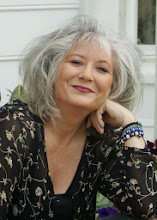
Apparently, I'm an Author

Despite this picture, which ran in the local paper, I forget I am an author about 90% of the time. I'm too insane with cleaning and laundry and driving the kids to Ninjitsu, and going over homework, and fending off the Dark Forces of the Demon Baby to really remember that yes, I write books. I have three release next year after a long lag time in which I turned things in but they were edited and slotted . . . and reslotted to a better month or what have you. So it's easy to forget then, too, when there's no huge promo going on.

But apparently, this is what I do for a living.

However, I swear--and I mean swear--that it still doesn't feel like reality most of the time. When Spanish Disco made Cosmopolitan magazine, I felt like someone Punk'd me. When US Weekly had a picture of Diary of a Blues Goddess, it felt like someone ran it in just two copies--mine and my parents'.

When I hold my books in my hand--when my author copies come--well . . . it feels like SOMEONE ELSE wrote this suff. Someone who eats bon-bons, has a secretary, and with NO Demon Baby in sight.

But apparently, like I said, I do this for a living. Who the hell knew?

However, when DOES it feel real?

When my editor calls me at 4:30 on a Friday to say, "The revision looks SPECTACULAR." When he discusses dialogue--"perfect." When he tells me to work on x or y (add another scene). When--oh my gosh--a LIVE HUMAN BEING/EDITOR (with most editors being human, you know) actually READ my stuff and wants to discuss it.

I know that sounds absolutely wacky. But that's about the ONLY time it feels real.

So . . . when do YOU feel like a real writer? Or are you still in denial?

Thursday, January 31, 2008

Blog Guest: My Kid

Baby Girl woke up yesterday, and came downstairs, still in her pjs, still sleepy-eyed. She dug through her backpack and pulled out her notebook. She has been working on a poem (she just turned 10, and the poem is about Virginia, where we live, for her English class).

"I need to change a word. I woke up this morning and had a BETTER word. I don't like how the old word rhymed."

She took her eraser, changed the old word to the new word. I think it's hereditary.

That day at school, she changed three other words until she was happy.

But what stuck with me, was the morning word. How she woke certain of what had to change.

I think I may have a writer.

So without anything further, here is her poem. Then I want you all to give her advice. She is going to take over this blog for the next 24 hours. You tell her what you remember about being a kid writer. About writing stories. What you wished you knew. Anything.

I AM VIRGINIA
Copyright By Bella

I am Virginia, filled with glee
There are various cardinals living in me
Dogwood is my wondrous flower
My flag is filled with remarkable power

George Washington, who was born here,
was president with pride
He even had a confident stride
Although when he was little he cut down the cherry tree
It didn't matter because he became a man of liberty

I am the home of Monticello
Where Thomas Jefferson made many plants grow
He even wrote the Declaration of Independence
A tribute to our country and all its resplendance

Visit me, enjoy my home
May my beauty stay in your heart, wherever you roam


  © Blogger template Brooklyn by Ourblogtemplates.com 2008

Back to TOP