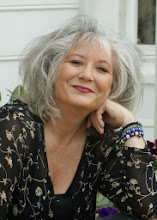
Choosing Characters: Blog Guest, Joe Barone

We have a special treat today . . . a guest author, Joe barone, whose first book has just been released from St. Martin's--and who has, without a doubt, one of the more interesting lead characters in recent memory. Joe was kind enough to "sit down" in cyberspace for an interview.
1) We'll get to your amazing characters in a minute, but first . . . I love a good "call" story . . . can you tell us about your path to publication?
I was born to write. I had a notebook of prose and poetry when I was in junior high or maybe earlier. I pursued several occupations--high school teacher, newspaper reporter/editor (briefly), and then minister--but I always wrote stories and later novels.When I retired, I wrote The Body in the Record Room, submitted it to a St. Martins Minotaur contest, and, about a year later, received a note from Senior Editor/Associate Publisher Ruth Cavin. She said my book had not won the contest but she wanted to make an offer to publish it. The Body in the Record Room was not my first novel. It was probably my tenth. It is the only one up to that time that really deserved publication. But several of the characters, most notably Harry, came from my earlier writing.
[SIDE NOTE: Ruth is a legend, and she was the first editor to give me encouragement when I was 22 years old--E.]
2) Now, can you give us a "fifty words or less" summary of your book . . . and tell us about Roy Rogers, the main character?
The book is the story of a mental patient who thinks he is the cowboy hero Roy Rogers. Set in 1954 in the Sunrise State Mental Hospital, the story opens when Roy finds a dead body in the hospital record room. Roy and his friends investigate and find that Sunrise has a dirty secret involving the sexual abuse of children. Roy himself is changed by the investigation and strengthened by the example of his heroes, Roy Rogers and Dale Evans.
3) I am absolutely fascinated by your main character. Why did you choose him, or shall I say how did HE choose YOU?
I grew up on the grounds of a huge state mental hospital. My father was a medical doctor who was the superintendent of the institution. I lived among mental patients, played baseball and other games with mental patients, and came to love and admire them. My Roy Rogers came out of that. That he would think he was Roy Rogers came about because one night I had a dream. There was a frantic man saying over and over again, "My name is Roy Rogers. That's who I am and that's who I'll always be." I got up, wrote the words on a Sticky Note and put them on my computer. I decided I would tell the story of why that man chose to "always be" Roy Rogers. The Body in the Record Room is the beginning of that story.
4) You are an ordained minister, but would you consider your mystery a Christian book? Where is your fiction's cross-section with your faith?
When you were raised on the grounds of a mental hospital, you have a broader definition of what it means to live in the love of Jesus Christ than some people would. I often say, God loves those we would throw away.That includes people in categories we would throw away--the mentally ill, homosexuals (whom I believe should be allowed full rights including marriage), and a lot of others.Because he was a prominent doctor in our community, my father had contact with all kinds of people. Often I admired the mental patients I came into contact with more than I did the members of the country club. That way of seeing things informs everything I am and everything I do. No, My mystery is not a Christian book. It is a mystery novel which deals with some very difficult things that Christians would surely find offensive. But it is the story of a man who finally chooses to live in the right way. He does that because of those around him who helped him, and because of the example of his heroes, two strong Christians, Roy Rogers and Dale Evans. I believe story telling is the most important thing anyone can do. In the end, what you do is more important than what you say. And that's where my faith intersects my writing. I will probably always write stories of people who, in some way or another, choose to do the right thing in the face of terrible adversity. My heroes may or may not be Christians in the normal sense. They may win or they may lose, but they will have done the right thing.
5) I am (ahem) too young to remember Roy and Dale beyond a photograph. A lot of my blog readers are too. What can you tell us about them?
In the late 40's and early 50's (before the advent of TV), we went to Saturday movie matinées. We watched Roy Rogers, Gene Autry, Hopalong Cassidy and other Western heroes, always in black and white. Color came later. These cowboy heroes were the pre-John Wayne heroes who formed our lives. But there was something different about Roy Rogers and his wife Dale Evans. They weren't just movie heroes. They lived strong, moral lives. They adopted troubled children. And they faced the death of several of their children including their daughter Robin who was born with Down's Syndrome in 1950 and who died in 1952. In 1950, Dale wrote the song "Happy Trails" which says, in part, that it is how you ride the trail that matters. Roy and Dale lived their lives with faith, strength and courage in the face of the most terrible thing any parent can face, the death of a child. That's what makes them real heroes to me and, finally, to my Roy Rogers.
6) Any advice for aspiring novelists?
Keep at it. It took me over 50 years. And, at least as far as I can tell, there are no tricks. There is no piece of software which will make things easy, no book which will write your book or story for you. You just have to keep writing and learning. There's no other way. As Roy and Dale would say, Happy Trails! And good luck in your writing!
***************
Gang, where do I even BEGIN? First of all, Joe's own background is fascinating. The character? Amazing. His call story? Incredible. His philosophy, if you will? Equally amazing. And just think, he's been visiting us here and not letting on about all of this terribly interesting stuff. I'm so glad I checked out his blog.
I intended this blog to be about amazing characters. But before I ask my usual question of you all . . . it is question number 6 that took me by surprise. Joe is retired, and it took him a while to be a published author. What am I saying? FIFTY YEARS. If that is not the most inspiring story. This is one author I would like to meet for coffee and learn a lot more about. But I will have to settle for buying his book. RUN, don't walk . . . and pick up a copy.
As to the subject of this blog today? How do you choose your characters? Or do they choose you?
I can tell you that the Roofer is based on pieces of real people, for example. But the Roofer's words came to me--"I'll break your legs" as a term of endearment. Sigh, with a dad like that? How could my characters but end up the way they did. Yes, my characters choose me, every single time.
Thoughts?


28 comments:
My copy of The Roofer hasn't come yet, pout.
I'm going to send this blog to another writer I know who is writing a Christian mystery. She's been published but is struggling with that second book.
Lastly, Roy Rogers helped my mother through the loss of her father. He didn't die, he divorced my grandmother and in many ways divorced the children too. So Mother always imagined Roy Rogers was her father and having that hero helped her to grow up a good person.
Your book looks interesting. I'll have to order me a copy.
richmond:
How interesting that Roy Rogers helped your mom. Even more interesting that in real life he apparently was such a kind man--so often we hear about these "darker" sides of people. I think the book sounds really fascinating. What I love, too, is not only that Joe got published after 50 years of writing, but with a character that, face it, on paper, breaks a lot of rules as far as what a publisher might traditionally be looking for!
E
Inspiring author. I often think of Richard Simmons and his message to the people struggling with losing insurmountable amounts of weight were simple; Never, never, never give up. A great thing to apply to all our goals.
Roy Rogers as a mental patient solving a crime? I can't wait to read this book!
Neat concept, and neat story of how it got published.
Joe--I went to the Minotaur imprint website a while back and couldn't find the links to the contests. I remember thinking about trying that route before I got an agent. Did St. Martin's discontinue those contests?
Oh, and did you land an agent once you had the contract in hand? Tell us about that.
Erica--How interesting that Ruth Cavin bought Joe's book and then he showed up on your blog. Shows how small the publishing world can be, huh?
Aimless:
Here's a little secret (now not so secret): I LOVE Richard Simmons. The man cracks me up every time he is on Letterman. They interplay--priceless.
E
Jude:
For certain types of mysteries, Ruth's the grand dame of publishing.
E
Erica,
I'll share my thank you (which I put on my blog today) with all those who look at these comments--
I was greatly honored (in fact, almost overwhelmed) to be in Erica Orloff's blog today. I don't know what to say about her comments. They were a blessing to me. Thanks, Erica. And thanks most of all for caring for the kind of hurting people we should all care for.
Jude,
In so far as I know, the contests are still going. I'll do my best to look up the links today and put them in a later comment. --Joe.
All I can say is 50 years is a LONG time. Holy CRAP!
Jude,
Here is the link. If it doesn't work, let me know.
http://us.macmillan.com/Content.aspx?publisher=smpminotaur&id=4933
As you may know, the contests are sponsored by St. Martin's in conjunction with writers' organizations. They have contests in several categories so most mystery writers would probably fit somewhere. The manuscript is read by a reader first and then, if the reader selects it, is forwarded to editors who choose the final winners.
I entered the contest several times over the years (only once each year, as the rules say). Often I received a nice canned rejection note, but once in a while, the reader sent a short email critique which was helpful. They aren't asked to do that (too many manuscripts) but if lightening strikes they might.
From what I read, Ruth Cavin was the one to encourage this method of letting new writers have their manuscripts read since they, like almost all publishers now, can't accept unsolicited manuscripts.
As I understand it, many writers' contests are frauds and you should stay away from them. This is the only one I ever entered. --Joe
Joe:
You made me blush. Thanks. :-)
E
Zoe:
Incredible! I just cannot even wrap my mind around it, and I just find it inspiring and profound.
E
Thanks for stopping by, Joe. Nice interview & congrats on the book.
Thanks, Joe.
Where on the website did you find the links? I still can't find them anywhere.
Jude,
The 2009 contest is already closed. I'd save the link I gave you above and click on it after April 2009 when they start the new contest. --Joe.
What a great interview, and the book sounds fascinating. My family has always owned nursing homes, and a few uncles own homes for mentally disabled people. I remember visiting the patients when we'd go see my uncle. I know that those life lessons stick with you, and I loved hearing Joe's perspective.
melanie:
I highly recommend Patrick McGrath's Asylum. It's also about living on the grounds of a psychiatric hospital.
Great interview! The book sounds fascinating. And I love your call story!
I've been writing for many years, and hearing that it took you 50 is inspiring. :)
Edie:
It's a gem of a story! And the funny thing was, I invited him on the basis of his character--and his call story was equally exciting!
E
Beautiful, beautiful, BEAUTIFUL!!
What a pleasure to know that there is such love in the world still.
I've linked Joe on my blog, and am VERY MUCH looking forward to reading his work. As well as yours...
Kind of a silly question for me to ask, but, I'm going to ask anyway. If you could chose one book for me to read of yours first, which would you recommend? I eventually want to read ALL of them, but where would you have me start?
I am truly touched by Joe's answers. Beautiful is all I can say.
What a fascinating upbringing! When I worked as a lifeguard at a camp (eons ago!), there were several weeks devoted to mental patients. They were my favorite weeks, no contest.
One of the things I love about my Kindle is I just did a click and a click, and instantly your book is in my purse. :-)
Realm:
it's tough to get ahold of, but The Roofer is my favorite. It's gritty (child abuse, the Irish in Hell's Kitchen) . . . but it's near and dear to my heart. For comedy, I think I am partial to Do They Wear High Heels in Heaven . . .
E
Okay, I have a new one to add to my list. I love the whole premise, but I think Joe's background might even be more fascinating than the novel! Thanks for pointing it out, Erica.
Characters - I don't know exactly where they come from, I think I'd generally go with the idea that they chose me. And my stories always start with the characters and then they tell me what happens, as oppose to plotting and then developing charaters. The one I'm working on now is a bit different for me, the characters, or a few of them, have bits and pieces of different people I knew in life and it's set in the neighborhood I grew up in.
I'm really impressed. The premise of the book is irresistible.
Hi Spy:
Wow . . . You know . . . I've avoided anything like the Kindle, but that is pretty cool.
E
Hi Merry:
The most amazing thing, when they choose you, is that it feels so "right"--so positive that this is the new character you're going to write.
E
Stephen:
When I visited Joe's blog and read about his book, that was my thought precisely!
E
This book sounds like a must read! I'm excited. Thanks for telling me about this cool book, Erica!
Post a Comment